Workshops
Application of the Accounting for Nature® Framework to Support Environmental Markets and Reporting Contributions Towards Nature Positive Goals
Monday 27 October 2025
9:00am - 1:00pm
$75.00 (places limited)
Seminar Room 2, The University Club, UWA
PRESENTER

Dr Adrian Ward
Accounting for Nature
[Read Bio]
Brief:
Designed for practitioners, policymakers, and industry, the workshop will showcase real-world case studies where the Accounting for Nature Framework has been used to quantify environmental outcomes and support market-based mechanisms to drive the implementation of projects to preserve and restore nature.
The session will also cover emerging areas where the Accounting for Nature Framework can be applied, including the evolving carbon co-benefit and biodiversity markets and strategies for scaling contributions to nature-positive outcomes. The interactive format will allow participants to discuss critical challenges and opportunities for integrating environmental accounting practices into their environmental initiatives, supporting the global shift towards nature recovery. The workshop will also invite a subset of AfN’s Accredited Experts to share their experiences implementing the Framework, promoting a discussion on the need for and importance of interdisciplinary practitioners with expertise in nature and markets.
By the end of the workshop, attendees will have a clear understanding of how the Framework can be leveraged to meet regulatory, market, and stakeholder expectations for environmental stewardship, and how it contributes to measurable progress toward nature-positive targets.
Getting Started with galah: Accessing and Filtering Biodiversity Data in Python
Monday 27 October 2025
9:30am - 11:30am
$Complimentary
Seminar Room 3, The University Club, UWA
PRESENTER
Amanda Buyan
[Read Bio]
Brief:
‘galah’ is an open-source software package now available in Python to source data from biodiversity informatics facilities, such as the Atlas of Living Australia (ALA) and the Global Biodiversity Information Facility (GBIF). While this information is commonly used in a range of research applications – particularly those focussed on understanding past and future species distributions – it can be difficult for users to filter the large amount of available information to the subset required to answer their particular question. In this workshop we will introduce ‘galah’, and demonstrate the features it supports for summarizing and filtering data on particular taxa, locations, or from specific providers or data resources. This will be useful both for researchers new to the Python programming environment wishing to learn the basics, and for more experienced researchers to understand the range of data types available from the ALA.
The workshop will consist of an introductory presentation, followed by a series of worked examples.
Attendees need to bring their own laptop for use during the workshop. Installation of the `galah-python` package is recommended prior to the workshop and instructions for its installation can be found here.
Darkening Nature: Mitigating Light Pollution for a Nature Positive Future
Monday 27 October 2025
9:30am - 12:30pm
$20.00 (places limited)
Seminar Room 4, The University Club, UWA
PRESENTER

Elliott Charlton
[Read Bio]
CO-PRESENTERS
Paul Whittock, Adam Mitchell and Lisa Nicholson, Nocterra
Brief:
This interactive workshop will delve into the National Light Pollution Guidelines and their crucial role in shaping a nature positive future by mitigating the adverse effects of artificial light on wildlife. Participants will explore how various species, including marine turtles, birds, and bats, are impacted by artificial lighting, which can cause disorientation, disrupt breeding and foraging behaviours, and fragment nocturnal movement corridors.
Through expert presentations and discussions, participants will gain a deeper understanding of the importance of addressing artificial light impacts, and learn how to measure biologically relevant light using innovative tools such as cameras, spectrometers, and satellite data. They will also discover how evolutionary ecology insights can inform our understanding of species-specific light perception, and how proactive and preventative measures can be integrated into development projects to minimize ecological harm.
The workshop will then transition into a group discussion session, where participants will have the opportunity to engage with industry professionals, consultants, researchers, and regulators in smaller groups, focused on specific fauna categories. This interactive session will facilitate knowledge sharing, collaboration, and idea generation, allowing participants to explore solutions and strategies for mitigating light pollution in a variety of contexts.
The workshop will culminate in a Panel Discussion, featuring a range of industry and regulator professionals, who will share their expertise and experiences in reducing light pollution through innovative design and conservation strategies. This final session will provide a platform for participants to ask questions, engage in discussions, and gain insights into the latest developments, priorities, and best practices in mitigating the impacts of artificial light on wildlife, ultimately contributing to a nature positive future.
True Tracks®: Indigenous Cultural & Intellectual Property (ICIP) Protection in Biodiversity Research & Practice
Monday 27 October 2025
9:00am - 1:00pm
$500 (places limited)
Seminar Room 1, The University Club, UWA
PRESENTER
Anika Valenti
[Read Bio]
Brief:
Participants will explore best practice approaches for engaging with First Nations peoples and communities in projects involving the collection, access, use, development, and commercialisation of biological resources and associated ICIP.
By embedding IP, ICIP, and cultural considerations in research and institutional practice, the biodiversity sector can foster respectful engagement, promote ethical collaboration, and enhance cultural competency.
Terri Janke and Company’s True Tracks® Indigenous Cultural and Intellectual Property workshops are designed to assist First Nations organisations and businesses, and organisations and businesses working with First Nations people and communities, to recognise and develop an understanding of the interaction between western IP laws and ICIP, and how ICIP should be recognised, protected and respected.
ICIP refers to the rights of First Nations people to their cultural heritage based on the fundamental right of self-determination. ICIP rights incorporate all aspects of traditional knowledge, cultural expressions and practices, ecological and environmental knowledge, bushfoods, language, arts & crafts, dance, song, stories, sites, ceremonial practices, ancestral remains and recordings and data collected about the same (known as Indigenous Data Sovereignty).
This workshop offers:
- A practical overview of legal protections for ICIP;
- Best practice strategies for ICIP protection, including protocols, Free, Prior and Informed Consent (FPIC) processes, benefit-sharing models, and contracting;
- Case studies illustrating both effective ICIP engagement and common missteps in the biodiversity and research sectors;
- Strategies for identifying and managing ICIP appropriately in projects and partnerships.
Participants will also be introduced to Terri Janke and Company’s True Tracks® Ten Principles. True Tracks® is a holistic and practical framework for ethical engagement with First Nations communities and the respectful use of ICIP, and has formed the basis for development of best practice ICIP protocols across a wide range of organisations, businesses, and projects.
Biodiversity Tools for Country: Using the ALA to Support Caring for Land and Sea
Monday 27 October 2025
1:00pm - 3:30pm
$Complimentary
Seminar Room 3, The University Club, UWA
PRESENTER
Juliet Seers
[Read Bio]
Brief:
This practical workshop is designed for Traditional Owners, Aboriginal and Torres Strait Islander land and sea managers, ranger groups, and community members interested in exploring online biodiversity information about plants and animals in areas important to them. You’ll learn about the Atlas of Living Australia, how to access publicly available occurrence records (species observations) and how this data can support planning and decision-making.
The workshop will guide you through using ALA’s tools to find species records relevant to your area, set up alerts for culturally significant species or locations, and access information about threatened species. You’ll also discover how sensitive data (like records of threatened species) is handled carefully to protect vulnerable wildlife.
This session is beginner-friendly, though basic web browsing skills will help. Please bring a laptop if you can, so you can follow along. Everyone will receive a simple take-home guide, and additional resources can be provided to those who want to explore further after the workshop.
Attendees should bring their own laptop for use during the workshop.
Using Visual Arts for Community Engagement on Biodiversity and Ecosystem Values
Monday 27 October 2025
1:00pm - 4:00pm
$20.00 (places limited)
Seminar Room 4, The University Club, UWA
PRESENTER
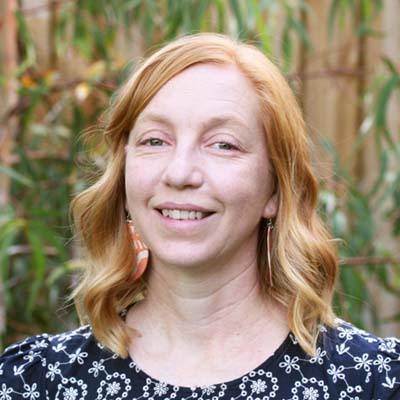
Dr Natasha Pauli
The University of Western Australia
[Read Bio]
CO-PRESENTERS
Emma Ligtermoet, CSIRO and Maria Ignatieva, The University of Western Australia
Brief:
Art helps people connect with the natural world. Arts-based approaches to community engagement are becoming more popular, and may aid in visualising desired futures and in understanding core values and complex concepts. Creative expression can also provide benefits for wellbeing and social connection. Best of all, arts-based approaches are for everyone – no prior artistic experience, skill or knowledge is required. Everyone is welcome in this workshop.
In this hands-on workshop, you will learn how a variety of creative practices can be integrated with research on biodiversity, ecosystems and community values, drawing on examples from recent research from the workshop convenors. Some of these practices include photography, collage, textile creation, and poetry writing.
Following this introduction, you will be guided by the workshop convenors to create your own artwork using simple, beginner-friendly techniques (for example, paper and/or fabric collage), to help visualise what a ‘nature positive’ future means to you. There will be time at the end of this workshop to reflect on the experience through discussion and viewing everyone’s creations. Artworks created by workshop participants will be available for viewing by attendees at ‘The Biodiversity Conference’ 2025.
This session promises to be both insightful and enjoyable, with ample opportunities to connect and socialise. All art materials will be provided, along with a selection of inspiration imagery around the theme of ‘Nature Positive’. Attendees may wish to bring along one or two photographs of your own if there is a specific aspect of nature you’d like to represent. Attendees are advised that we will be using art materials such as glue, charcoal, watercolour and permanent marker, and to dress accordingly.
 Elliott Charlton specialises in the field of artificial light, focusing on developing and implementing advanced light modelling techniques tailored for industry use cases. He is passionate about visualising and communicating complex analysis results in a biologically meaningful way, justifying practical and effective on-the-ground control measures that minimise the pervasive impact of artificial light on wildlife.
 Dr Adrian Ward is the Chief Executive Officer of Accounting for Nature, a not-for-profit organisation pioneering the measurement and certification of environmental condition through the Accounting for Nature® Framework. With over 20 years’ experience in environmental markets, finance, and natural capital, Adrian has worked across the public and private sectors in Australia and internationally. A former Australian Government Greenhouse & Energy Auditor, he holds a PhD in Environmental Finance and brings a strong track record of leadership at the intersection of science, policy, and business.
Dr Natasha Pauli is a Senior Lecturer in geography and environmental science at the University of Western Australia. Her research links the social, ecological and spatial sciences, emphasising how integrating local environmental knowledge and perceptions within planning frameworks can create better outcomes for people and nature. Natasha incorporates participatory methods and arts-based approaches into her research on social-ecological systems and environmental values.
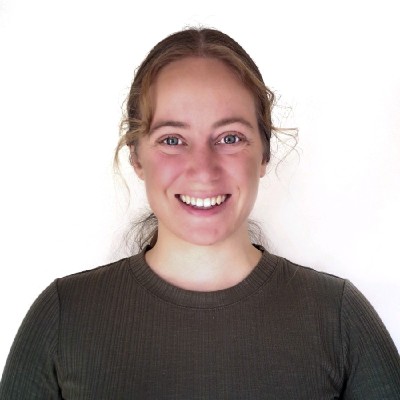
Juliet Seers leads training, industry engagement, and the Indigenous Partnerships Program at the Atlas of Living Australia (CSIRO). With 10+ years in environmental and education sectors, she’s passionate about accessible science and biodiversity conservation. Juliet has worked on land management projects with Bush Heritage, Phillip Island Nature Parks, and international wildlife initiatives, and drives key partnerships through the Australian Biodiversity Data Mobilisation Program and CSIRO’s Indigenous RAP initiatives.
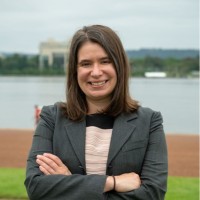
Amanda Buyan is a data engineer for the ALA. She completed her PhD in Structural Biology, and uses her extensive Python skills to manage the suite of Python packages the ALA has to offer.
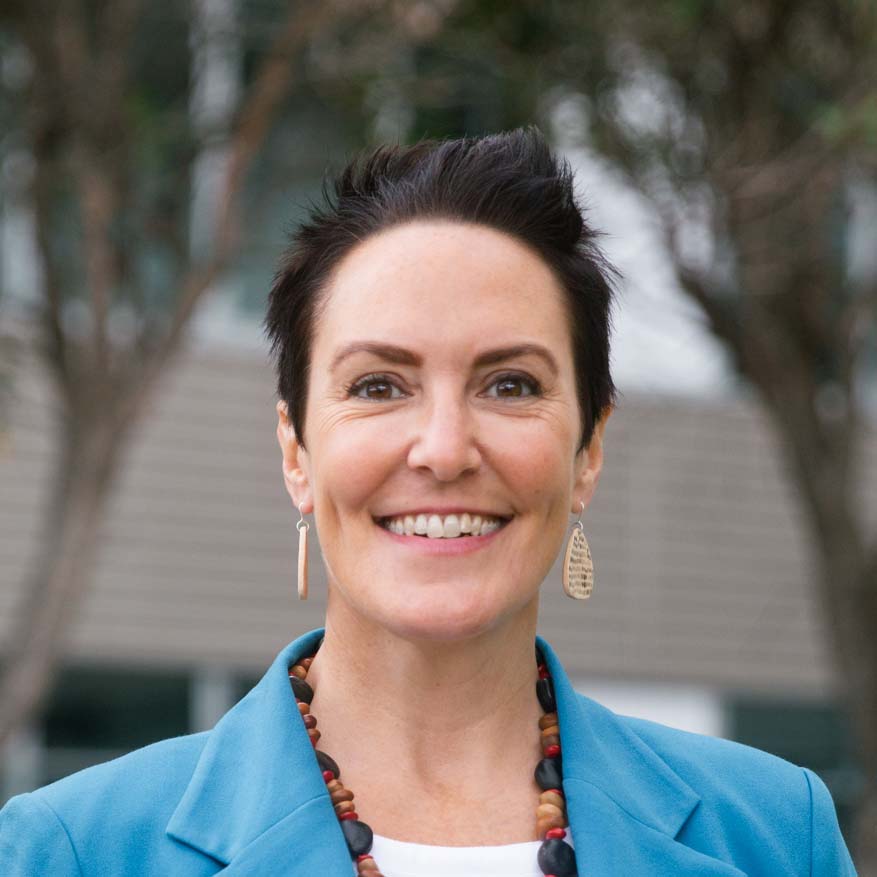
The presentation will be delivered by Anika Valenti, Special Counsel at Terri Janke and Company. Anika has over 15 years’ experience in the legal profession and has built an extensive practice dedicated to the protection of Indigenous knowledge, culture, and rights. She has developed leading industry resources to support best practice ICIP protection and regularly delivers training across Australia on IP, ICIP, bushfoods, biological resources, tourism, business, and governance.